
On this page
Start with the lowest volume at which the band can rehearse the passage effectively. Arrange the room so nobody has to stand directly beside a speaker or drum kit to hear themselves, and put genuinely quiet breaks into the session. Ask the room operator about speaker placement and volume controls before choosing the space.
What should you confirm before renting?
| Room question | Why the answer matters |
|---|---|
| Can the band move amplifiers and speakers? | Members may need different listening positions as the arrangement changes. |
| Can each source be adjusted separately? | One excessively loud source can prompt everyone else to turn up. |
| Is there somewhere quiet for a break? | A pause beside a playing speaker does not give ears a rest. |
| Are there room-specific volume limits? | The rehearsal plan must fit the space and its operating conditions. |
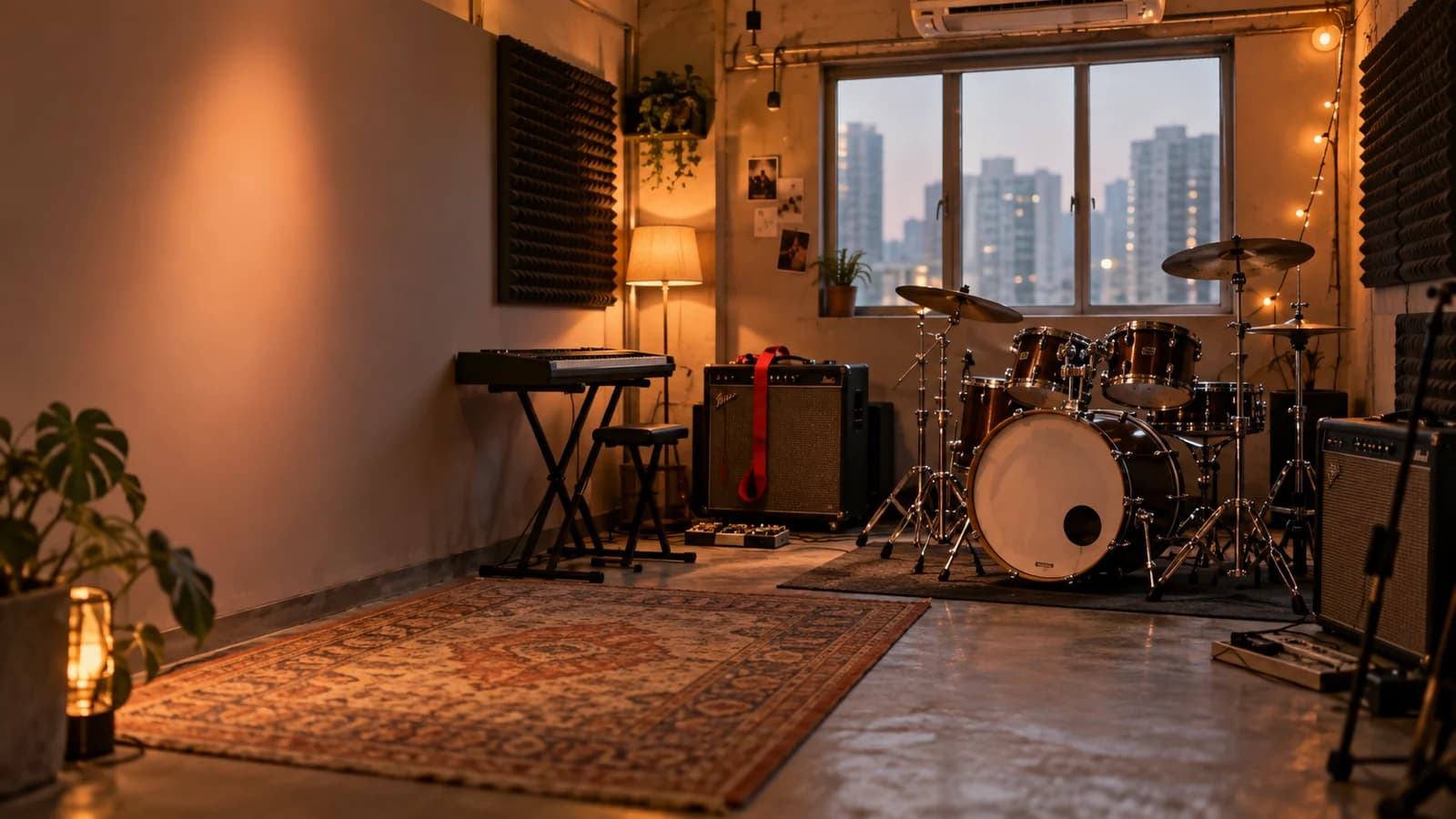
A room photograph cannot establish a comfortable listening position. Describe the instruments, number of players and whether anyone uses in-ear monitoring when asking these questions. Confirm what can actually be moved; do not assume a fixed speaker, drum kit or cable run is adjustable.
How should the session run?
Begin with a short sound check at reduced levels. Let each player say what they cannot hear before increasing a master control. Try changing their position or the balance of individual sources first. Rehearse quieter sections at a lower level, then use full-band volume only for passages that need it. Agree in advance who can call for a pause and where the group will go for it.
The US National Institute for Occupational Safety and Health advises musicians to monitor both sound level and exposure duration, play at lower levels where possible, rest their ears in quiet areas and use suitable hearing protection when appropriate. Those recommendations support a plan, but they do not make a particular rehearsal length or volume automatically safe.
What if one player is still struggling to hear?
Do not treat a request for more volume as the only possible fix. Check whether a speaker points at that player's ears, whether another instrument masks their part, and whether moving the player changes the balance. Ask the room operator before changing installed equipment. Musicians who use hearing protection can discuss a suitable option with a qualified hearing professional; the band should not prescribe one model for everyone.
Keep a short note of the room layout that worked, the passages that needed more level and where breaks were possible. Use the party checklist to assign the sound check, break and reset tasks, then use venue search to compare rooms against those requirements.
Found this useful?
Send it to the friends you're planning with.