
On this page
Key takeaways
- Check the gear first: drums, amps, keyboard and PA, and which models. If it is not listed, ask the host.
- Drummers usually bring their own cymbals, pedal and sticks. Ask about cables and DI boxes too.
- Allow 15 minutes to set up and 15 minutes to pack down inside your booking.
- Calendars open 90 days ahead, so a regular band can book several weeks of sessions at once.
- Friday to Sunday, public holidays and the day before a public holiday are at the weekend rate.
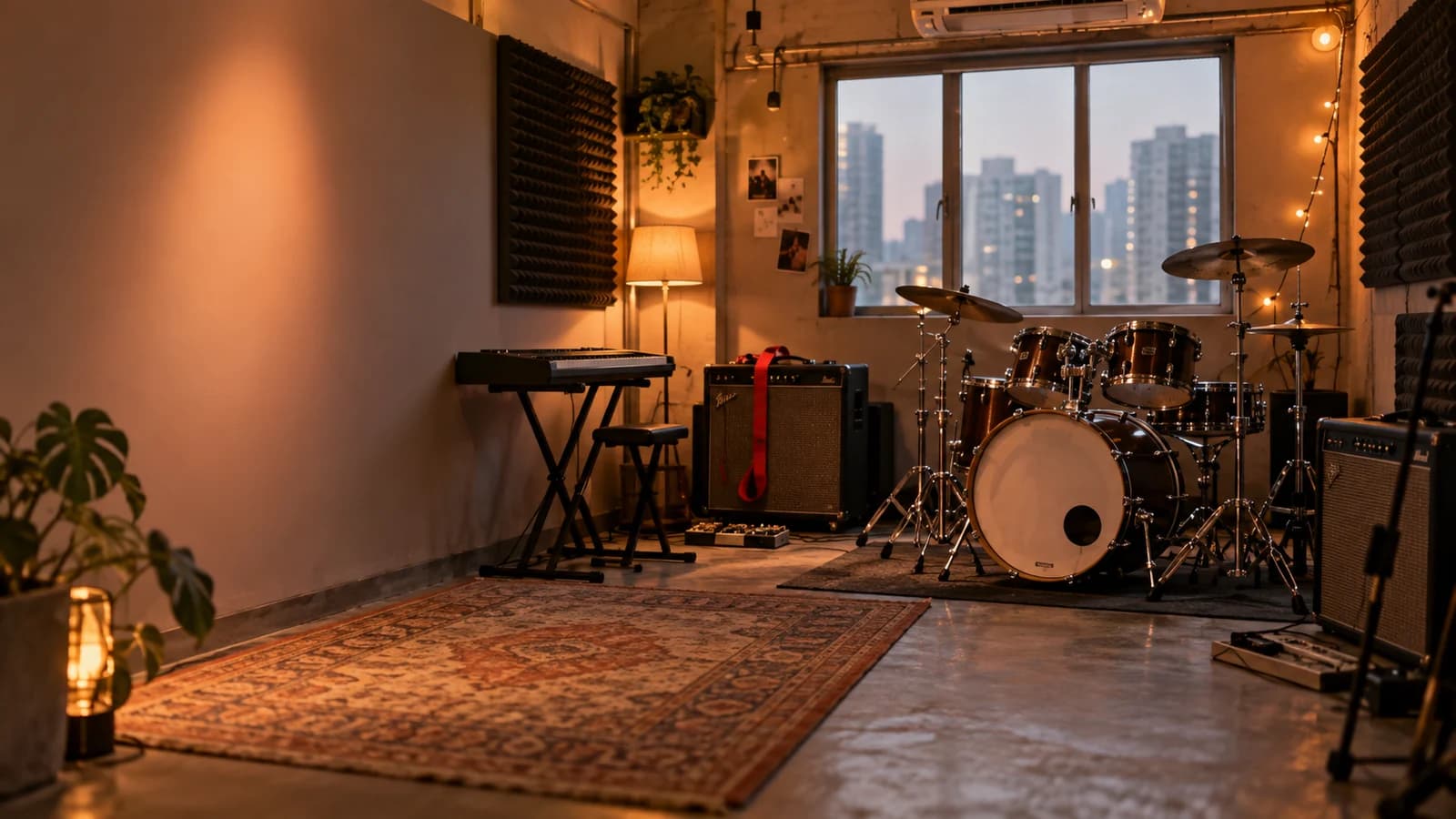
Check the gear first: is there a drum kit, amps, a keyboard and a PA, and which models? Then look at the room size, soundproofing and air conditioning. If you want to record, pick a room with recording equipment. On Gatherland you search by date, time and group size, see the total and availability straight away, and pay online.
What should I check before booking a band room?
Drums
- Is it a full kit, with cymbals and a kick pedal?
- What condition are the heads in, and does the throne adjust?
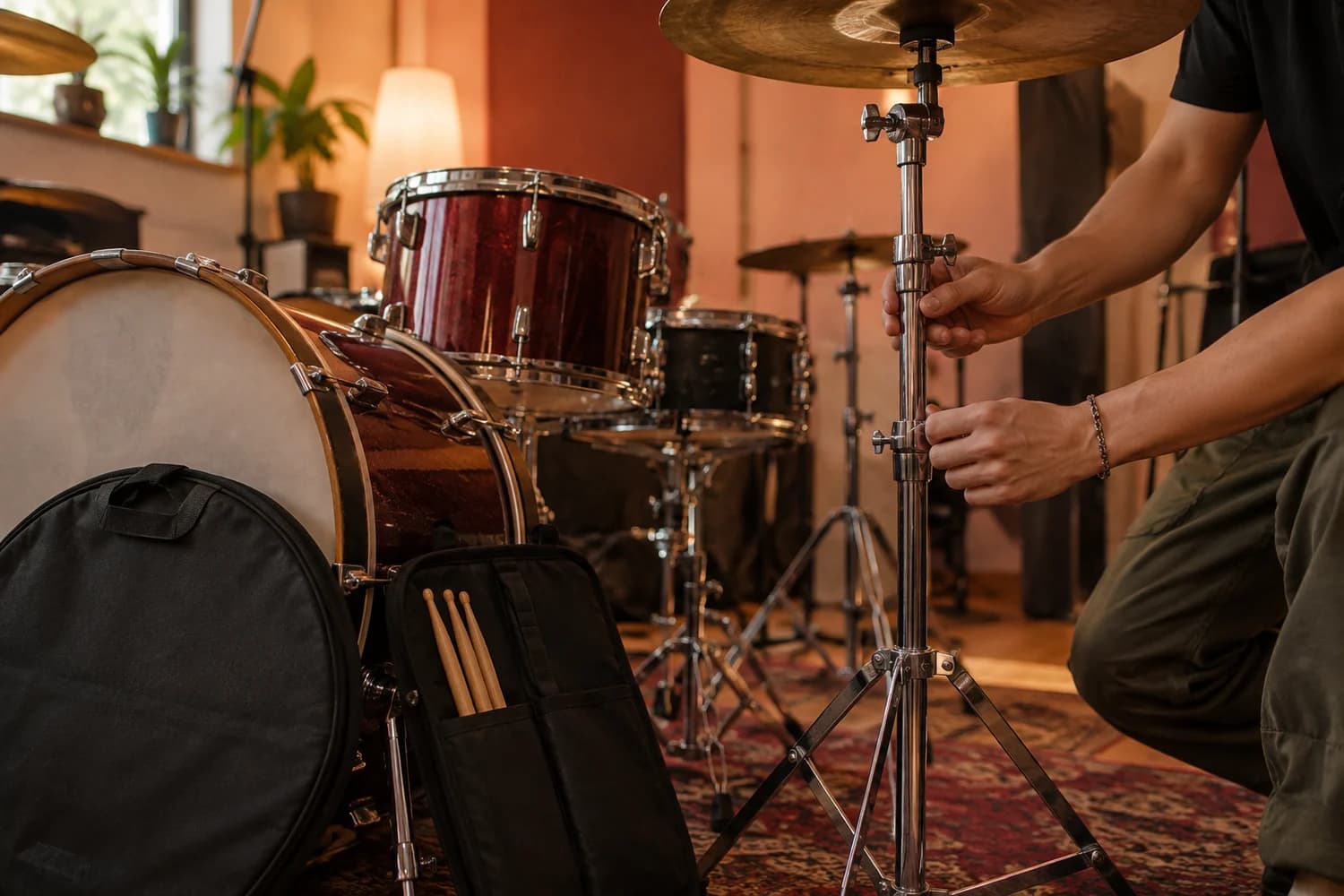
- Most drummers bring their own cymbals, pedal and sticks. Ask what the venue provides.
- See band rooms with a drum kit.
Amps and keyboard
- How many guitar and bass amps, which models, and how powerful?
- How many keys on the keyboard, and is there a stand and sustain pedal?
- Are DI boxes, cables and adapters provided, or should you bring them?
Many hosts list models in the amenity notes. If not, message the host from the venue page.
PA and microphones
- How many channels on the PA? Enough for the whole band?
- How many microphones and stands?
- Are there monitors?
Room size and headcount
- Once the drums, amps and keyboard are set up, is there still room to stand?
- Larger bands or bands with backing vocals need a bigger room.
- The venue page shows the maximum headcount.
Soundproofing and air conditioning
- Good soundproofing lets you play at full volume without hearing the room next door.
- A few hours of playing gets hot. The air conditioning needs to keep up.
Recording and engineers
- Some band rooms have recording equipment for demos or for recording rehearsals.
- Some offer an engineer as an add-on. If a venue does, it appears during booking and is added to the total.
- See band rooms with recording equipment.
Access and carrying gear
- Is there a lift for guitars, pedalboards and keyboards?
- Is it self check-in or staffed? That affects how late you can book and how you get in.
- Many band rooms are in industrial buildings. The lobby may be unstaffed in the evening and lifts can be slow at busy times, so allow an extra ten minutes rather than losing practice time.
Which room suits which use?
Full band practice
- You need the full set: drums, two amps, a keyboard and a PA.
- The room should be big enough for everyone to stand comfortably and hear each other.
- See band rooms for rehearsals.
Solo practice and lessons
- A smaller room is often enough. Check it has the one instrument you need, such as drums or a keyboard.
- Lessons need space for the student and teacher side by side.
- See music studios for lessons.
Recording a demo
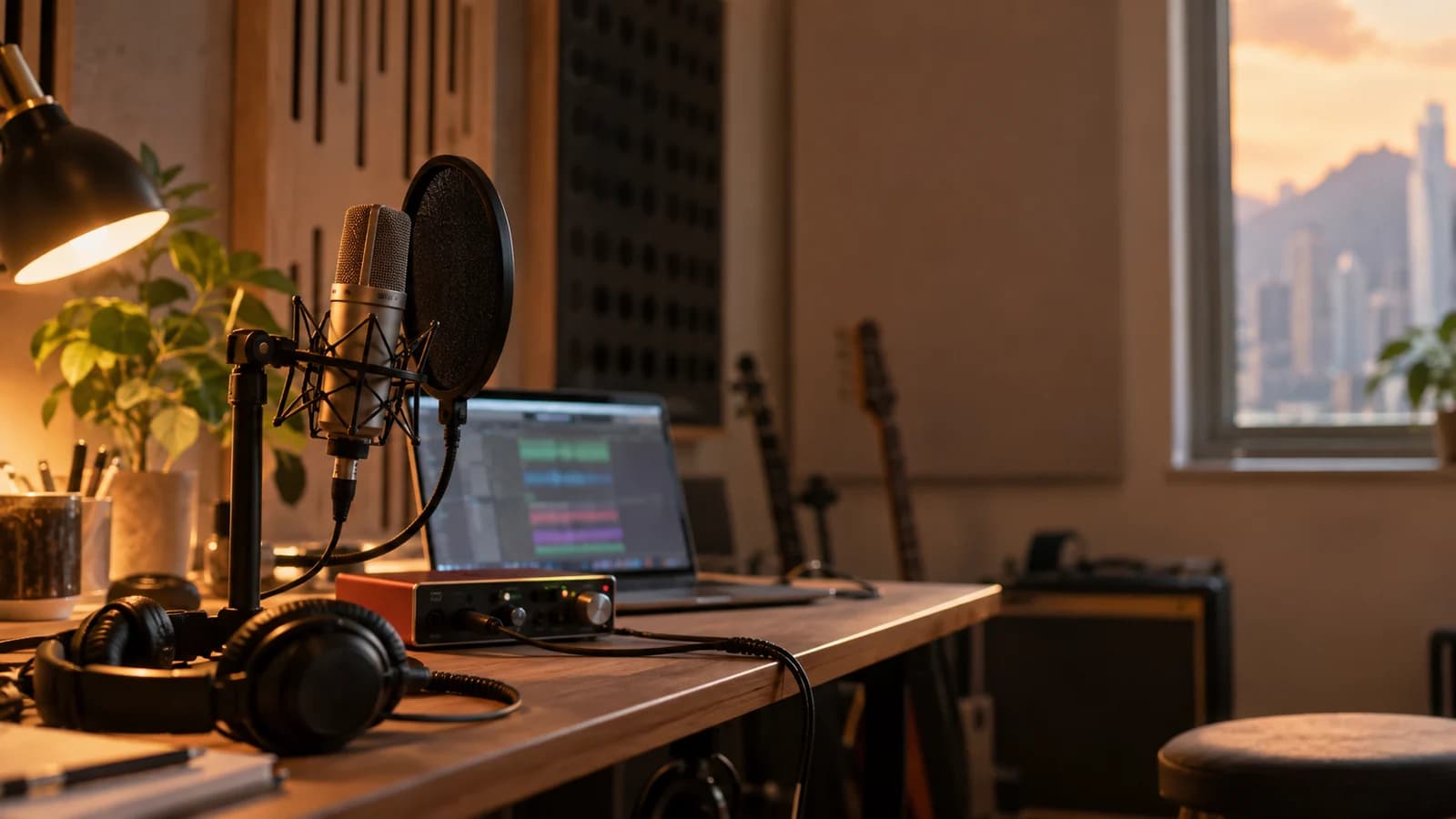
- You need recording equipment. Ask about the interface, microphones and headphones.
- Good soundproofing keeps the next room off your tracks.
- If you are new to recording, choose a venue that offers an engineer as an add-on.
- See music studios for recording sessions.
How should we use a two-hour session?
You pay by the hour, and setup and chat can easily eat half of it. A sample plan for a two-hour full-band rehearsal:
- 1
First 15 minutes: set up and soundcheck
The drummer swaps in cymbals and sets the throne; guitar and bass plug in and set amps; the singer checks the mic and monitor level.
- 2
10 minutes: warm up
Play the song the band knows best once through and balance the levels.
- 3
60 minutes: focused practice
Start with the weakest song or section and work on it in parts, rather than running everything top to bottom.
- 4
20 minutes: full run-through
Play the set as if it were a gig and record it on a phone to review at home.
- 5
Last 15 minutes: pack down
Turn amp volumes to zero before switching off, coil cables, reset the kit, take your rubbish and leave on time.
What should we bring?
What to ask the host before booking
- Models of the drums, amps, keyboard and PA.
- Whether cymbals, a kick pedal, cables and DI boxes are provided.
- Whether you can bring your own amp head or pedals.
- How recording equipment and engineers are charged.
- When the lobby and lifts switch to card or code access.
Message the host from the venue page. The conversation stays on the platform.
Common mistakes
- Not allowing setup and pack-down time: slots run in 30-minute steps, so build in 15 minutes at each end rather than running over.
- The drummer assumes cymbals are provided: finding only shells on arrival spoils the session.
- Booking before the band agrees a time: use the date poll first, then book.
- Judging gear from photos: photos do not show amp wattage or keyboard size. Ask the host.
How does pricing work?
Band rooms usually charge per room per hour. Watch for:
- Weekend rate: Friday to Sunday, public holidays and the day before a public holiday.
- Minimum hours: some rooms set a minimum booking length.
- Add-ons, such as an engineer or extra equipment, added to the total if you choose them.
For typical price levels, see the price index. Search results show the actual total for your slot, with no booking fee for guests.
Ways to keep costs down
- Weekday sessions avoid the weekend rate.
- Allow time to set up at the start and pack down at the end, so you do not run into overtime.
- If the band is sharing the cost, the cost splitter works it out.
How do I book?
- Go to band rooms and choose a district, or use search.
- Enter the date, start time, duration and group size.
- Check the equipment, house rules, cancellation policy and any deposit.
- Pay online in full. Instant-book venues confirm straight away; for host-confirms venues, the host has 24 hours to accept.
- After confirmation you see the exact address. Self check-in venues send entry instructions by email and WhatsApp before the start.
For regular practice see band rooms for rehearsals. Calendars open 90 days ahead, roughly 12 weeks, so a band that practises weekly can book several sessions at once instead of chasing slots each time. If the band has not agreed a time yet, start with the date poll.
Band rooms you can book now
Frequently asked questions
What equipment does a band room usually have?
It varies. Common items are a drum kit, guitar and bass amps, a keyboard, a PA and microphones. The venue page lists the amenities, and many hosts add model names. If not, message the host from the venue page.
Do I need to bring my own cymbals and kick pedal?
It depends on the venue. Some provide cymbals, others only the shells. Drummers should ask before booking, or simply bring their own cymbals, pedal and sticks.
Can I record in a band room?
Some band rooms have recording equipment, and some offer an engineer as an add-on. Browse rooms with recording equipment and confirm the setup and any extra cost before you book.
How is a band room priced?
Usually per room per hour. Friday to Sunday, public holidays and the day before a public holiday are charged at the weekend rate, and some rooms set a minimum number of hours. Search with your date, time and group size to see the total.
Can we book the same slot every week?
Calendars open 90 days ahead, so you can book each of the next several weeks in advance. To discuss a longer arrangement, message the host from the venue page.
Find a venue
Found this useful?
Send it to the friends you're planning with.