
On this page
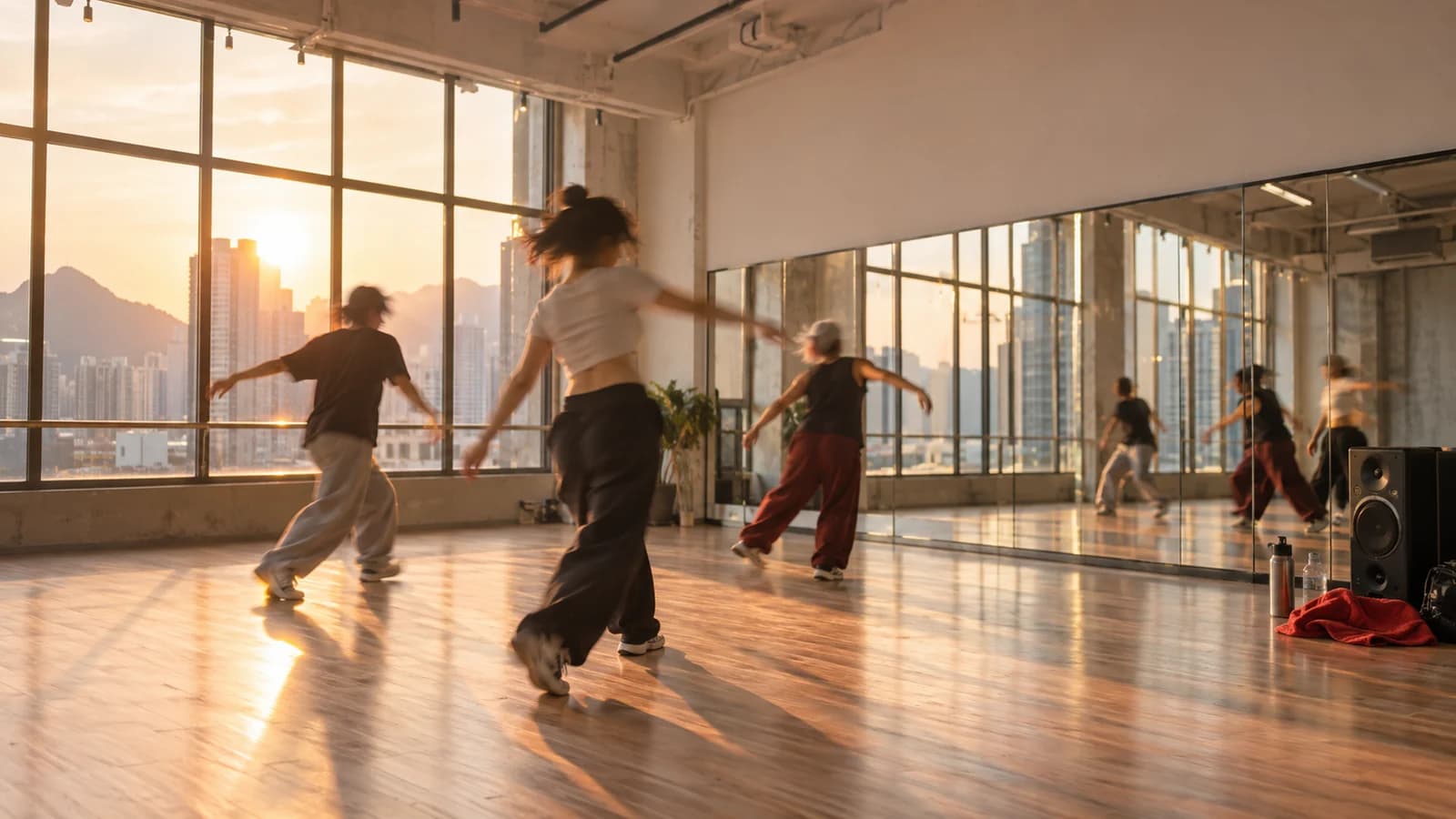
A dance rehearsal should include time to prepare the body, check the room, drink water, pause when effort or heat builds, and cool down before leaving. Treat those parts as rehearsal activities inside the booked time, not optional extras to squeeze into the corridor. If the studio cannot stay comfortable for the planned movement, reduce intensity, change the sequence or stop. A mirror and sound system do not tell you whether the room will remain suitable once everybody starts moving.
Reserve time for the entire physical session
Work backwards from the room handback time. Allow for entry, changing shoes, a room check, warm-up, learning or marking movements, more demanding full runs, pauses, cool-down and reset. A leader who books only enough time for repeated full-speed runs will feel pressure to cut the first and last stages. The Centre for Health Protection's exercise guidance describes warm-up as a gradual transition from rest, and says an effective warm-up takes five to ten minutes. It also advises people to advance gradually and stop if they feel unwell.
A schedule is a planning tool, not a universal exercise prescription. A team rehearsing a slow formation, a strenuous routine or a sequence with lifts will need different pacing and instruction. Ask the coach or movement lead to set the actual workload for the participants. The organiser should still protect a warm-up block and a close-down block in the room reservation. If late arrivals miss the opening, have them join at an appropriate point after their own preparation instead of sending them straight into a fast run.
Check the room before raising effort
When the group arrives, assess how the room feels with the planned number of dancers inside. Ask whether the air-conditioning or ventilation is operating as expected, whether the air changes after movement begins, and whether water can be kept within reach without becoming a spill hazard. Check the route to a cooler waiting area and know who to contact about a faulty system. The CHP heat guidance specifically advises maintaining good indoor ventilation or using fans or air-conditioning during hot conditions. This is relevant even for an indoor booking: outside heat, sun through windows and a room full of active people can affect comfort.
Do not infer a studio's temperature control from a listing photo or a feature icon. Ask the operator about the actual room, equipment controls and whether windows may be opened. If the room is small, a practical inspection is to do an easy marking run, then ask participants whether it feels hotter or harder to breathe before moving to full effort. If the answer is concerning, adapt immediately. A different district or a larger mirror will not fix an unavailable cooling system during that session.
Prepare bodies and movement without rushing
The CHP describes light to moderate warm-up movements that begin slowly and build pace, including gentle jogging, arm swings and dynamic movements. Use an activity appropriate to the routine and the group's ability, supervised by whoever directs the rehearsal. Warm-up is a gradual ramp, not a competition to become exhausted first. Shoes and clothing should fit the activity and room; the CHP advises comfortable, breathable clothing and shoes suited to the exercise and venue. A floor suitability check remains important, but this plan focuses on how the group uses time and responds to heat.
Separate learning a new movement from repeating it at full speed. Marking a sequence at lower intensity lets the group discuss positions and timing while preserving energy for runs that need full effort. Put corrections into short pauses instead of leaving everyone standing under active lighting while one person demonstrates repeatedly. Participants should be able to say they need a pause without having to defend their fitness. That is especially important in mixed-experience groups where an ambitious pace may suit only the most conditioned dancers.
Make water and pauses easy to use
Ask dancers to bring enough water and identify a safe place for bottles. The CHP preparation advice says to bring sufficient water to replace fluid lost through perspiration; its heat guidance also calls for timely hydration. Do not use a fixed amount from a generic rehearsal template, because needs vary by person, activity and conditions. Provide a clear opportunity to drink before thirst or fatigue becomes the reason a dancer finally stops. A designated bottle area also keeps the movement floor clear.
Breaks can be tied to the structure of the routine: after a demanding run, before repeating a section that produced mistakes, or when the room feels warmer. A leader can ask one person to monitor the clock, another to check whether the ventilation remains effective, and the dancers to report how they feel. The goal is to catch a change while it is still easy to adjust. If the group must keep pushing pauses later to finish a recording, shorten the recording plan instead of borrowing time from recovery.
Know the stop signs and response
The CHP lists dizziness, headache, nausea, shortness of breath and confusion as signs that call for rest, help and medical advice as soon as possible in the context of heat illness. Its exercise advice separately says to stop immediately if dizzy, nauseous or short of breath during activity and seek medical help when needed. Take a participant's report seriously even if the room seems acceptable to others. Stop the run, move them to a cooler place, seek help and follow appropriate medical advice. Convulsions or loss of consciousness are serious heat-stroke warning signs in the CHP guidance and call for urgent first aid.
A group leader should know the studio address, exit route and a contact who can meet responders at the entrance. Do not spend time debating whether symptoms are caused by heat, a meal, a medication or another condition. The leader's job is to stop the activity and get qualified help, not make a diagnosis. If the room itself remains too warm or the cooling has failed, pausing one dancer and restarting for everyone else may leave the underlying problem unresolved. Consider ending the session or relocating only when a genuinely suitable alternative is confirmed.
Work through a realistic rehearsal allocation
Hypothetical example: A small group rents a studio for a two-hour routine rehearsal. They use the opening minutes to enter, check air flow and place bottles away from the dance area. The movement lead then runs a gradual warm-up, followed by lower-intensity marking of the new section. After a full run, the group pauses for water and corrections. The leader asks how the room feels before deciding whether to do another demanding run. They reserve the end for a slower close-down, packing and returning the room as agreed.
The exact minute marks are deliberately flexible. If changing or setup takes longer, the group cuts a run rather than dropping warm-up and recovery. If cooling is weak or anyone feels unwell, the leader lowers effort or stops. If the routine requires more repetition than the reservation can hold responsibly, a later session is a better planning decision than crowding more full runs into the same time. This is a rehearsal capacity calculation, not a promise that a two-hour studio booking is safe for every group.
Ask the studio the questions that affect this plan
Before selecting a room, ask about ventilation or air-conditioning controls, drinking-water arrangements, permitted footwear, floor cleaning, the maximum group size the operator allows, the space available for resting, and time needed for entry and exit. These are questions for the specific operator, not assumptions based on a generic studio category. Ask about any limits on music volume or opening windows as well, because a workaround that violates venue conditions is not a usable fallback. Record the answers alongside the proposed routine and participant count.
Use Gatherland search to collect possible dance studios, then confirm these operational details directly before committing to a session. The site is a public preview, so do not treat a search result as evidence of live availability or a confirmed reservation. A useful comparison is the room that supports the whole rehearsal cycle under the actual conditions, including recovery and handback. Good pacing will not compensate for a room that cannot support the planned group, and a good room will not rescue a schedule with no time to pause.
Adapt the plan for filming and mixed abilities
If the group is filming a routine, identify the few takes that truly require full effort. Use lower-intensity camera blocking first so dancers know where to enter and leave the frame. Allow a pause after demanding takes, and check whether lighting equipment makes the room feel warmer. A camera operator should not ask for “one more take” without the movement lead checking the dancers. With beginners and experienced performers together, choose a baseline sequence everyone can perform reliably, then let stronger dancers add variation only where it does not change shared spacing. Ask about injuries or restrictions privately and let participants decline a movement; the organiser should not turn the room booking into a medical assessment. These choices keep the session focused on a good take while preserving the time needed to finish safely and return the studio in the agreed condition.
Found this useful?
Send it to the friends you're planning with.