
On this page
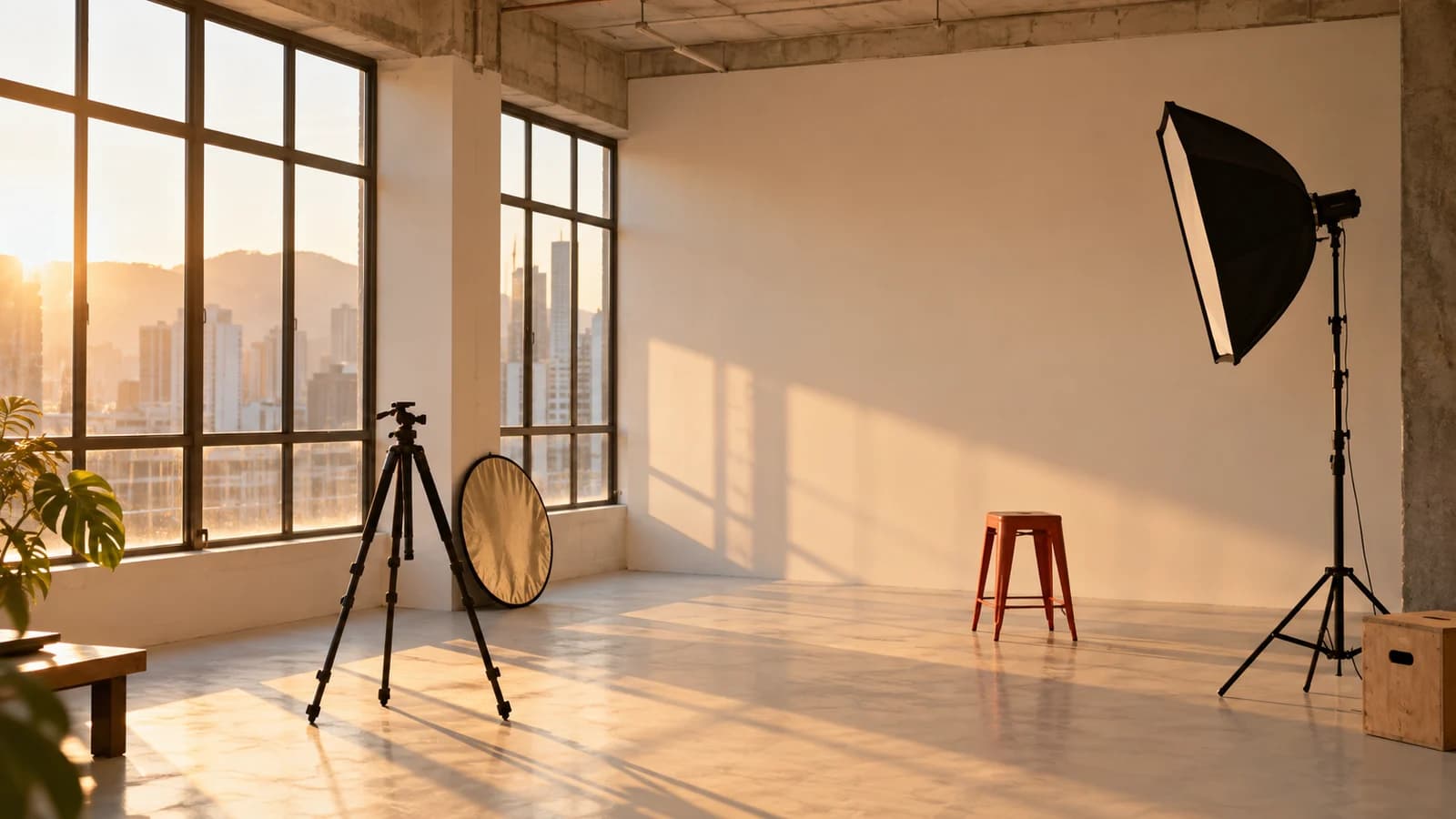
Choose a daylight studio when the look depends on window light and the team can schedule key shots for a suitable part of the day. Choose a room suited to controlled lighting when consistent exposure, a repeatable setup or a longer shoot matters more. Neither label tells you enough by itself: inspect the room and confirm what you may bring or use.
What changes the decision?
| Shoot need | Favour daylight when… | Favour controlled lighting when… |
|---|---|---|
| Intended look | Window light is part of the brief. | The brief calls for a specific, repeatable lighting setup. |
| Timing | The key shots fit the usable window-light period. | Shooting spans changing light or several setups. |
| Room control | Curtains and window position support the desired image. | Windows can be covered and equipment can be positioned safely. |
| Equipment | A simpler setup suits the shot. | The team needs confirmed power, space and permission for its own lights. |
Adobe's guide to diffused light describes soft window light and the use of curtains to filter direct sun. It also describes softboxes for greater control. That explains the lighting trade-off; it does not establish what any particular studio supplies.
Two hypothetical briefs
Hypothetical brief A: A small portrait session wants a gentle window-lit look. The team can schedule the portraits around the light and is willing to adjust the camera position. A daylight room is the first room type to inspect. The team still needs to confirm the window position, curtain options and how much floor space remains beside the window.
Hypothetical brief B: A product team must photograph several items with matching light across a long session. A room where outside light can be reduced and lamps can be placed predictably is the stronger starting point. The team should confirm power access, allowed equipment, backdrop space and time for setup before selecting it. These briefs are examples, not available studios.
What should you ask before deciding?
Request recent room photographs taken near your intended shooting time. Ask whether the window can be covered, where power points sit, what lighting equipment is actually included, and whether your own stands and modifiers are permitted. Check the camera-to-subject distance after the backdrop and crew are in place. Leave time for setup and pack-up within the planned session.
Use studio search to identify rooms worth checking, then compare their actual conditions against the brief. A studio described as having natural light may still be unsuitable for the shot you have in mind.
Found this useful?
Send it to the friends you're planning with.