
On this page
A group portrait session in a rented studio works best when the organiser settles the purpose, participant choices, shot order and delivery route before the camera is set up. The room must support the chosen background and light, but the main decision is how each person will take part and how the finished images will be used. A clear plan prevents a polished shoot from becoming a collection of pictures nobody agreed to share.
Start with the intended use of each photograph
Ask whether the pictures are for an internal team page, a public website, a printed programme, individual keepsakes or some combination. These are different outputs. A close headshot for a staff directory needs a different frame from a wide group photograph for an event recap. Write down the required crop, orientation, background and delivery format for each use. Adobe’s commercial photography guidance recommends planning the intended use and a shot list before the session. That advice helps a small team as much as a large production.
Separate the question “may we take this picture?” from “where may we publish it?” A participant might welcome a private portrait but decline a public group image. Ask about the planned channels in plain language before the shoot and provide a practical route for someone to opt out of a public image. Record decisions in a way the organiser can apply during selection. This is a good operational practice; any formal legal or contractual requirements depend on the real project and should be checked separately.
Create a simple use matrix: individual portraits for the participant, selected portraits for an agreed team page, and group images for an agreed event recap. Name the person who approves a public selection. Avoid an open-ended promise that every photograph can be used anywhere later. A precise brief reduces rework and makes it easier to answer a participant who asks what will happen to their image.
What should the studio brief include?
Describe the number of people, the kinds of pictures, the largest group, and any changes of clothing or background. Ask the venue whether the room, furniture, lighting equipment and setup time suit that plan; verify what is actually included rather than assuming it from a listing image. A photographer may want a quiet holding area for people waiting, a mirror, a surface for bags and a clear route from waiting area to set. Those are workflow needs, not claims that any particular Gatherland room provides them.
Look at the background from camera height, not only from the doorway. Nikon’s portrait guidance explains why a simple background and controlled framing keep attention on the subject. A busy wall or a bright window directly behind a face may require a different position or lighting plan. Work with the photographer to choose a background that also accommodates the widest intended group. If the brief calls for both formal and relaxed images, decide whether one setup can serve both before spending time moving every person twice.
Confirm where equipment can stand and where cables will run. Check the venue’s actual rules for moving furniture, using lights, applying temporary backdrop materials and leaving bags. Do not block an exit or assume that a portable backdrop will fit beneath a low ceiling. Ask whether a trial visit or actual room dimensions are available. A short preflight saves time that would otherwise be spent discovering constraints after participants have arrived.
How do you build a humane shot order?
Make a list of outputs, then map people to them. For example, take individual portraits first for participants with a hard departure time, followed by small teams and the full group. Do not order people solely by seniority if it means someone with limited availability waits through every setup change. If a participant needs a seated pose, more space, or a quieter time, arrange that before calling them to set. Keep the schedule flexible enough for retakes and small delays.
Allow each person to know roughly when they are needed. A waiting message can state the arrival window, clothing guidance, what to bring, expected time on set and who can answer questions. Avoid imposing a single appearance rule that does not suit everyone. Ask the photographer to explain where to stand and where to look in clear, calm terms. Nikon’s portrait examples show how background, body angle and softer lighting change a result; those are choices to try with the subject, not reasons to insist on one pose for every person.
A contact sheet or live preview can help the team see whether the framing meets the brief, but agree who gets to view it. When everyone crowds around a monitor, the session slows and the subject may feel judged. Let the photographer and a designated organiser make technical checks, then invite the participant to flag an obvious concern. A short review at the end of each setup is cheaper than discovering after the room is vacated that a required orientation was never taken.
Decide what happens to files after the shoot
Agree in advance who receives originals, who chooses final images, who edits them and who may distribute them. Use a named handoff rather than a public link sent around a large group. If a participant asks that a particular image not be shared, the organiser needs a way to identify it before publication. Keep a record of selected versions so a later correction does not leave an older image circulating through several folders.
For a public project, check that intended uses fit the photographer’s agreement and any permissions obtained from participants. Adobe notes that commercial photography briefs commonly specify where and how long pictures will be used; the exact terms of a particular engagement must be read rather than guessed. If the project collects names or other personal information alongside images, plan who holds the files, how they are shared and when their continued storage will be reviewed. The article does not decide whether a particular photo is regulated personal data or replace project-specific legal advice.
Set a deletion and archive decision. Do you need every unselected frame, or only the approved final set and evidence of the approval? The answer depends on the project. What matters operationally is that one named owner can find the approved files, remove an accidental export and answer a later question about usage. A vague shared drive with multiple copies is difficult to control.
Hypothetical example: portraits for a small community project
Suppose a community project needs eight individual portraits, one three-person committee image and a wide picture for a private newsletter. This is a hypothetical brief, not a claim about a real venue or client. The organiser asks each participant in advance which uses they accept and notes that one person does not want a public portrait. The photographer plans a neutral background that works for vertical individual frames and a wider committee composition. The organiser checks actual studio dimensions, furniture rules and included lights before choosing a room.
On the day, two participants with early departures are photographed first. The photographer takes a quick test of the individual frame and checks that there is space for the wider group. The participant who declined public use may still receive a private picture, but the organiser excludes it from public selection. After the shoot, the designated editor chooses final files and checks them against the use matrix. This sequence gives the photographer a clear production goal and gives participants meaningful control over where their images go.
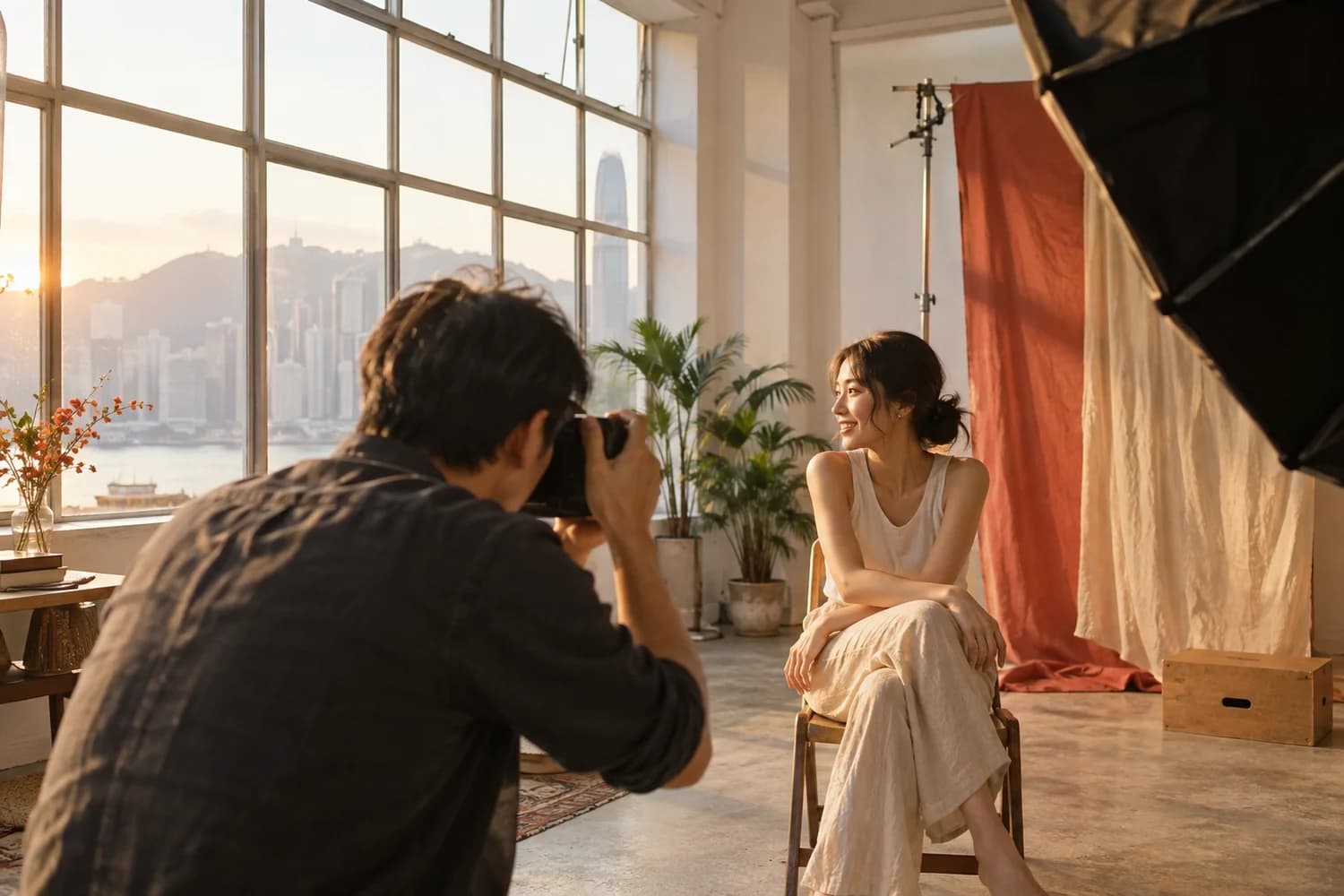
If the room has a striking window but variable daylight, the photographer might use it for an optional relaxed set while reserving the neutral setup for essential portraits. If the room lacks the necessary width, the organiser changes the shot plan or finds another space before the event. A good studio choice is the one that supports the required deliverables and participant experience, not simply the room with the most impressive promotional photograph.
Questions to close before committing to a room
Can the team make the widest required frame? Are the background and light suitable for the intended use? Is there a place for people to wait without entering the shot? How long will setup, participant changes and reset take? What equipment and furniture are permitted? Who will manage participant choices and final file delivery? If any answer is unknown, mark it as a question for the venue or photographer; do not turn an assumption into a booking promise.
Use Gatherland’s search page to shortlist room types and then confirm the relevant details with the actual provider. The site is a public preview, so the article makes no claim of live availability or a completed booking. The useful outcome of the planning work is a studio brief, a participant use plan and a delivery owner that survive the shoot day.
Sources
Found this useful?
Send it to the friends you're planning with.