
On this page
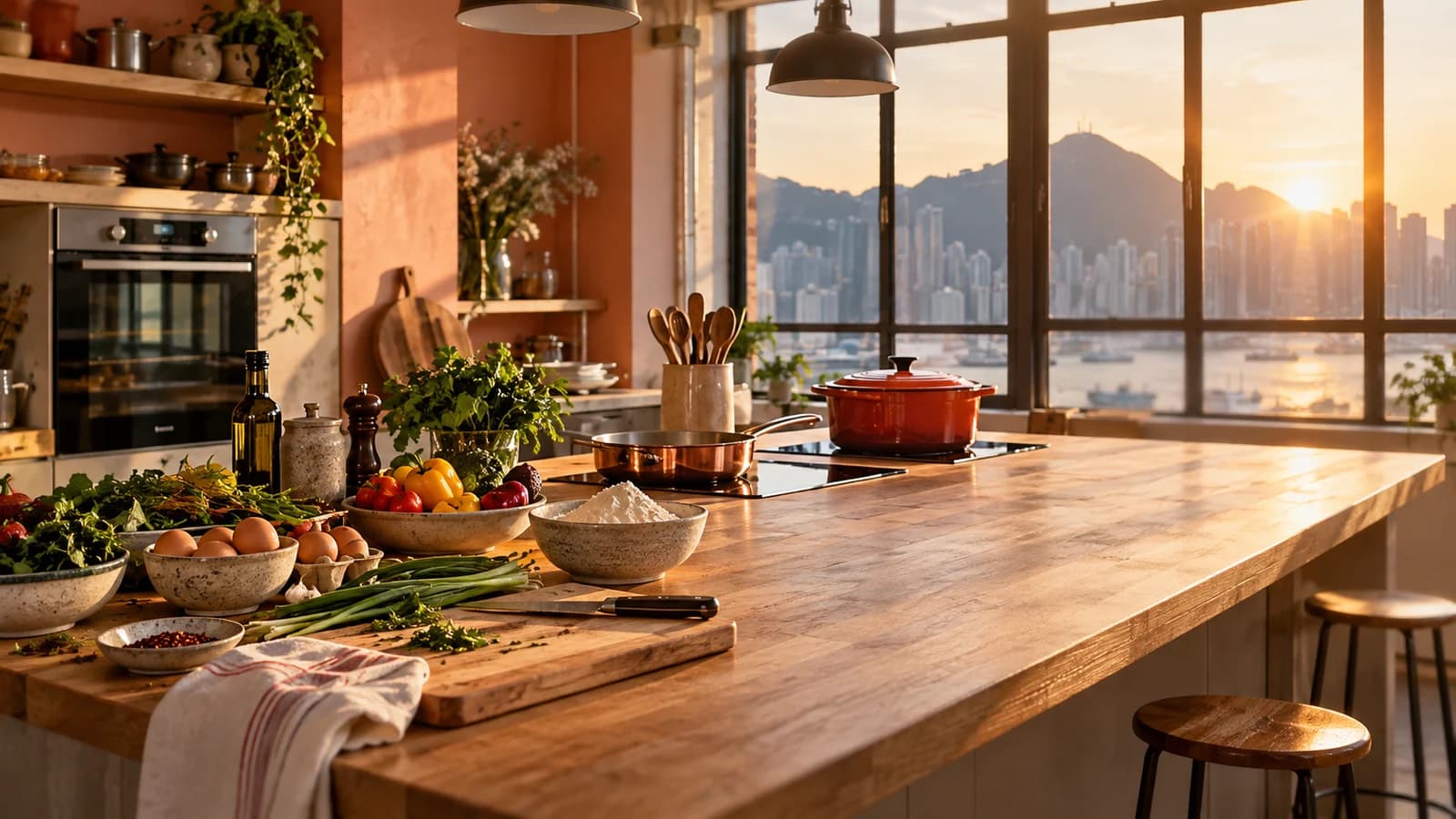
A group cooking session works best when the organiser maps the food's route before booking: where ingredients arrive, where raw food is prepared, where cooked food lands, and how the room is cleaned before departure. Ask the studio to confirm the actual equipment and rules, then design a menu that fits those constraints. A handsome kitchen photograph cannot establish that a particular venue has a working refrigerator, enough sinks, separate boards or permission to bring outside food.
Start with the menu, then test the room against it
Write down every dish as a sequence of storage, washing, cutting, heating, plating and serving. Highlight the point at which a raw ingredient could touch food that will be eaten without further cooking. That is the key reason a pretty open counter may be unsuitable for a busy team. The Centre for Food Safety's five keys cover safe materials, cleanliness, separation, thorough cooking and safe temperatures. Treat those as a planning framework, not as a certificate for any rental studio.
A cold salad alongside raw chicken needs more separation than a class making only baked rolls. A team that intends to cook several hot dishes simultaneously needs confirmed hob capacity, oven space and a safe place for hot pans. A group expecting to eat after the lesson needs enough seating and a serving surface that is free from raw-food preparation. If the menu is too demanding for the layout, simplify the menu or choose a different room; do not assume a larger guest capacity means a larger usable kitchen.
Ask the host which appliances, pans, knives and boards are actually included. Confirm whether the refrigerator can hold your ingredients without crowding, whether a food thermometer is available, where hands can be washed with water and liquid soap, and whether staff must operate any equipment. These are booking questions, not features to infer from listing photographs. Confirm how ingredients can be delivered, how long early access lasts and whether cleaning and waste disposal fall inside the hired period.
Draw four zones on a simple room sketch
Mark an arrival and storage point, a raw preparation surface, a cooking point and a clean serving point. A small studio may use one counter for more than one job, but the jobs should run in sequence with a proper cleaning step between them. Keep bags, coats and phones away from food surfaces. Put a designated clean plate or tray beside the stove so cooked food does not return to the board that held raw ingredients. Position a rubbish container where peelings and packaging can be removed without carrying them across the plating area.
The Centre for Food Safety's preparation guidance says to use different utensils for raw and cooked or ready-to-eat food, wash hands after handling raw meat or poultry before touching ready-to-eat food, and clean utensils and work surfaces after use. It also notes that washing raw meat or poultry can spread contamination through splashes. In a compact studio, those points change the order of work: wash produce first, prepare ready-to-eat components on clean equipment, then open and handle raw meat at its assigned station. If you must switch the use of a surface, stop work and clean it before the next task.
Give each station a named task owner. This is an organising suggestion rather than a legal staffing rule. One person can keep a list of which boards and utensils belong to raw preparation; another can manage cooked food and serving. If everyone changes stations casually, colour labels alone will not preserve separation. A brief demonstration before cooking can show where the soap, clean towels, bins and first-aid contacts are, without turning the session into a lecture.
Decide how ingredients will travel and wait
Purchase perishable ingredients as close to the session as practical and ask how they will be kept appropriately cold in transit. Confirm the venue's real refrigerator space before you buy. The CFS reminder says refrigerators should be at or below 4°C, freezers at or below minus 18°C, and raw meat, poultry and seafood should be stored below ready-to-eat or cooked foods in covered containers. If the studio cannot provide suitable storage, change the menu or the plan. A host's general statement that a fridge exists does not tell you its available space or temperature.
Keep a written ingredient list and label food intended for different dishes. This prevents a helper from using the only clean garnish board for raw ingredients and helps the group avoid leaving forgotten perishables behind. Ask attendees privately about dietary needs before finalising the menu, but avoid claiming that a shared kitchen can be made allergen-free. If a serious allergy is involved, discuss whether the room, utensils and ingredients can realistically meet that person's needs; choose another arrangement when they cannot.
When food is cooked, do not use appearance alone as proof that every portion is done. The CFS reminder advises a food thermometer and a centre temperature of at least 75°C for thorough cooking. It also gives separate guidance for soups, stews and eggs. Choose recipes the group can check and serve within the available time. If the studio lacks a thermometer or you cannot manage the process, a simpler menu is the safer operational decision.
Work a realistic timetable before you commit
Consider a hypothetical group of eight planning a three-hour dumpling and vegetable session. The organiser asks the studio whether there are two usable preparation surfaces, a sink with soap, enough pans, a working fridge and a suitable waste route. They assign the first part of the session to arrivals, handwashing and washing vegetables. The group prepares the ready-to-eat garnish before opening raw filling ingredients. A designated raw station makes and cooks the filling; a separate clean surface holds cooked food. The final part of the hire is reserved for serving, washing and returning equipment. The times are an example, not a claim about any venue's minimum hire or staff provision.
If the studio has only one narrow counter, the organiser can remove the uncooked garnish, use prewashed ingredients as allowed by the recipe, or select a different studio. If two pans cannot operate at once, reduce the number of simultaneous dishes. If the group wants a longer shared meal, add time to the plan rather than quietly consuming the clean-up window. The menu is a design variable; the room's confirmed physical limits are constraints.
A useful prebooking message lists the menu, ingredient types, group size and equipment needs, then asks for a written answer about food storage, permitted appliances, sink access, outside food, waste disposal and the room return condition. If an answer is uncertain, keep that item open and do not build the schedule around it. On a preview marketplace, searching for a cooking studio is a way to explore venue types and questions; it is not proof of current inventory or a completed booking.
Close the loop at serving and handover
Move cooked food to the clean serving area with utensils that have not touched raw ingredients. The CFS reminder advises serving thoroughly cooked food above 60°C, refrigerating leftovers within two hours and reheating refrigerated leftovers thoroughly, no more than once. For a social session, the easiest way to avoid uncertain holding conditions is often to cook close to the meal and make a clear decision about leftovers before guests leave. Do not promise that a venue will store leftovers after your hire.
Reserve time to scrape food debris into the agreed bin, wash utensils and worktops with detergent, and check the oven, fridge and drawers for remaining food. Ask the host how to handle used oil, recyclables and general waste; do not pour oil away or leave containers wherever convenient. Have a final person compare the room with the agreed return conditions and photograph only your own items and work areas if a record is useful. A good cooking session ends with a safe meal and a clear handover, not a rushed crowd around an uncleared counter.
Before confirming a room, use this decision test: can the group keep raw food separate, wash hands, cook the chosen dishes thoroughly, maintain suitable temperatures and restore the space within the booked time? If any answer depends on an unverified amenity, obtain that answer from the host or adjust the plan. The party checklist can hold the practical assignments alongside the menu and ingredient list.
Found this useful?
Send it to the friends you're planning with.