On this page
Key takeaways
- If everyone just wants to play, book a mahjong room; if some will not play, book a party room with a mahjong table.
- Automatic tables are faster and quieter, but usually need the venue's own tiles.
- Games overrun. Book an extra 30 to 60 minutes and keep the last 30 minutes for tidying up.
- Friday to Sunday, public holidays and the day before a public holiday are charged at the weekend rate.
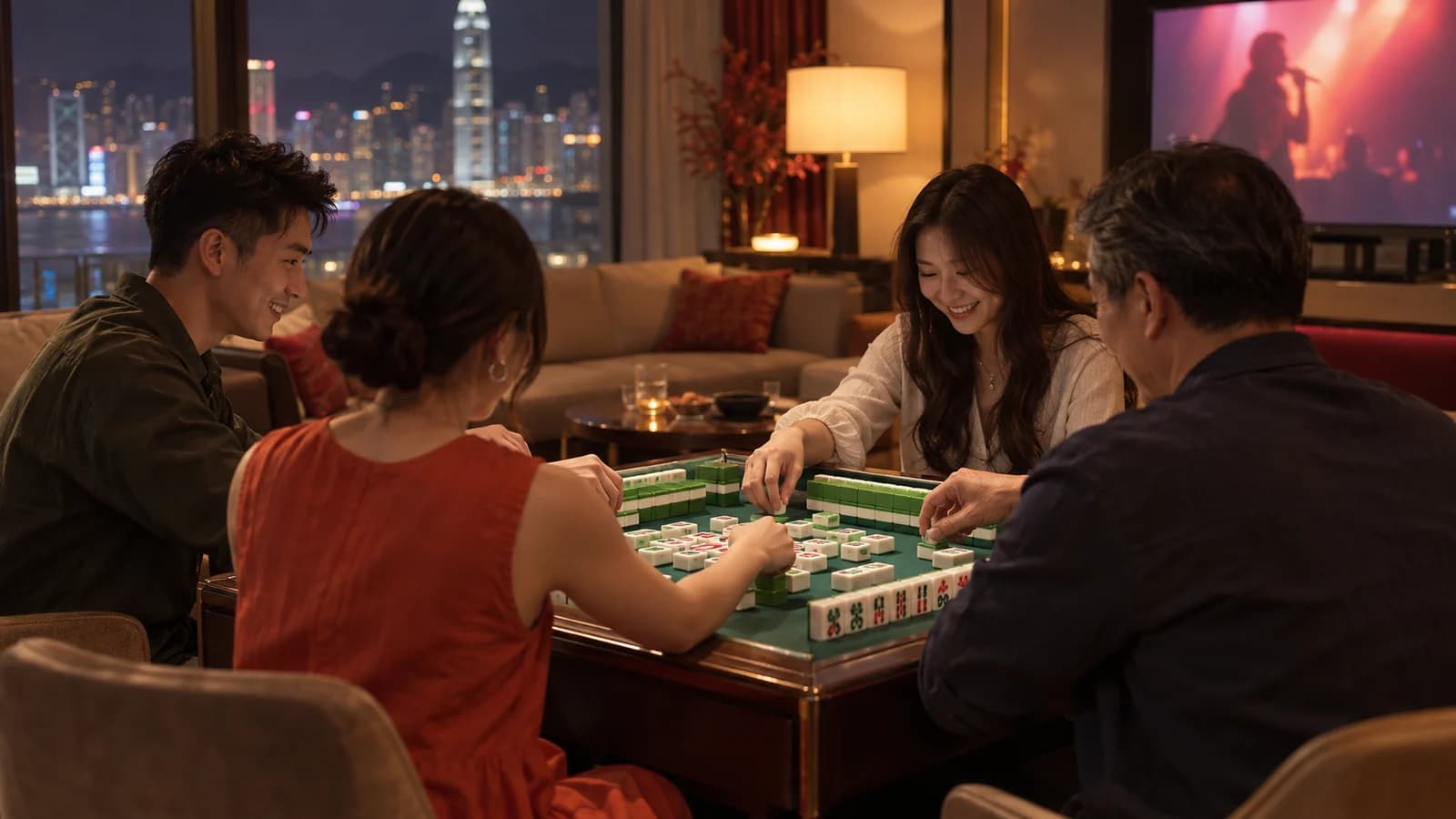
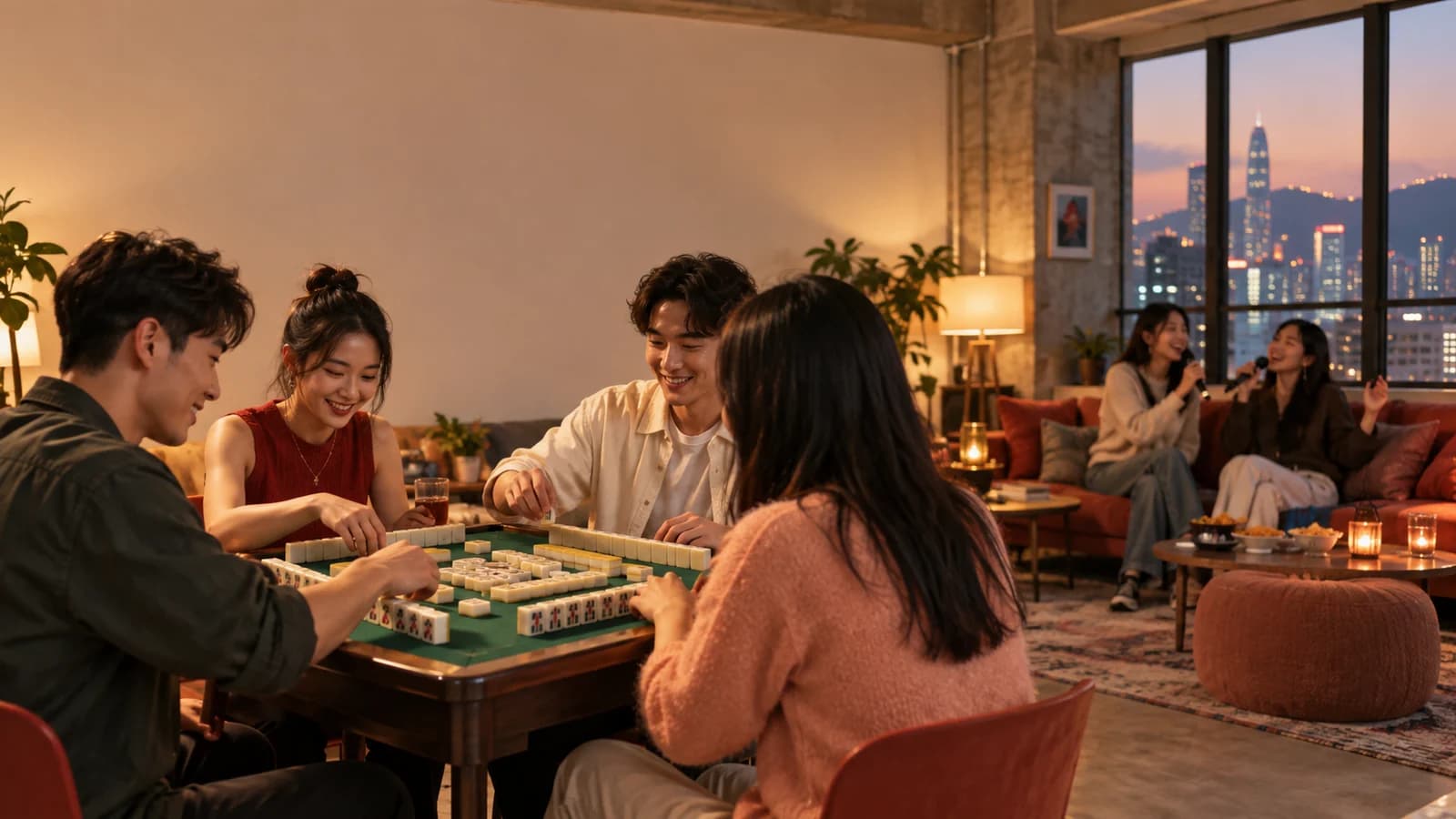
For a private mahjong session, book a dedicated mahjong room or a party room with a mahjong table. If everyone just wants to play, a mahjong room is usually enough; if some want to play while others sing or play games, a party room fits better. Before booking, check whether the table is automatic or manual, the tile size, and the style you play, and message the host if anything is unclear.
Mahjong room or party room?
| Mahjong room | Party room with mahjong | |
|---|---|---|
| Focus | Playing mahjong | Mahjong plus other entertainment |
| Size | Usually one or two tables | Room for more people |
| Good for | A focused session with friends | Birthdays and gatherings where not everyone plays |
| Browse | Mahjong rooms | Party rooms with mahjong |
You can search mahjong rooms by size, for example 4 people or 8 people. Four players per table; if friends want to rotate in, count them too and search with the total.
How do automatic and manual tables differ?
Automatic tables
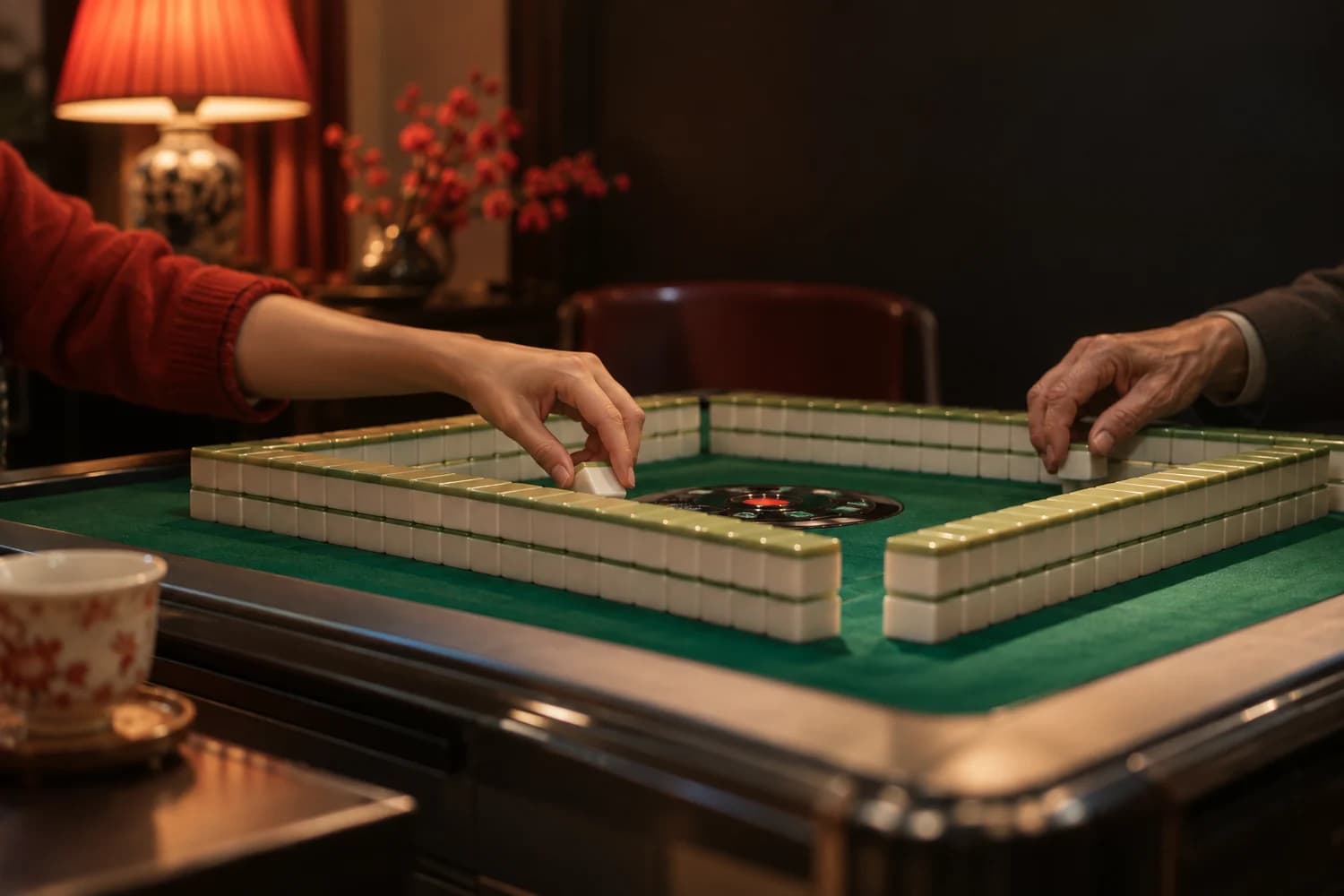
An automatic mahjong table shuffles and builds the walls itself. At the end of a hand you push the tiles in and the next set rises, so rounds go much faster and there is less clatter. There are different designs, such as tables where tiles drop through an opening in the centre and cycle inside the table. Automatic tables are generally made for a specific tile size, so the venue normally supplies the tiles with the table.
Manual tables
A manual table is the traditional kind, where players shuffle and build by hand. It is more flexible about which tiles you use, and some players simply prefer it. Rounds take longer and it is louder, so ask whether the venue has noise rules.
Automatic table
- Shuffles and builds the walls for you
- Quieter between hands
- Usually uses the venue's own tiles
- Your own set may not fit
Manual table
- The traditional shuffle by hand
- Works with your favourite set
- Slower between hands
- Louder, so mind the neighbours at night
Does tile size matter?
Tiles come in different sizes. Larger tiles are easier to read, which older players often appreciate; smaller ones are lighter to handle and stack. It is a matter of habit, not quality.
Different styles of play also use different tile sets and rules, for example Cantonese and Taiwanese mahjong. If your group has a preferred style, ask the host whether the tiles provided suit it. Hosts sometimes note the table type and tile size in the amenity details on the listing, so read those first.
Party rooms with mahjong tables
What should I ask before booking?
Message the host from the venue page:
- Are the tables automatic or manual, and how many are there?
- What size and type of tiles are provided?
- Can we bring our own tiles?
- Are there rules on noise or the time we must leave?
- Are there free soft drinks, or can we bring food?
- Is there space near the table for drinks and snacks without getting in the way?
How should we plan the session?
A sample running order. Adjust the length to how long your group usually plays:
- 1
Arrive 15 minutes early
Allow time for the lift and finding the unit. At self check-in venues the entry instructions go to the booker by email and WhatsApp before the start, so forward them to everyone.
- 2
Test the table and tiles
Play a hand or two on an automatic table to check it works. If anything is wrong, message the host straight away, not halfway through.
- 3
Agree the rules
Settle the style and scoring before you start, so friends used to different house rules do not argue mid-game.
- 4
Break for food
Order delivery early and give the floor and unit. Whether you can eat at the table is up to the venue's house rules.
- 5
Pack up in the last 30 minutes
Finish the final round, put the tiles away, bag the rubbish and leave on time so overtime does not touch any deposit.
How is it priced?
Venues charge per person per hour or per room per hour. Mahjong sessions tend to run long, and some venues set a minimum number of hours. Friday to Sunday, public holidays and the day before a public holiday are charged at the weekend rate. For typical levels, see the price index.
There is no booking fee, so the total shown is what you pay. If you are sharing the cost, the cost splitter works out each person's share, and the group date poll helps get four people on the same day.
Can we play through the night?
Some venues allow it; see mahjong rooms open overnight or party rooms open overnight. Check the house rules and leaving time, and see the overnight party room guide.
What about friends who do not play?
Not everyone in a group plays mahjong. In a party room, they can sing karaoke, play console games or try a board game. For ideas, see party games for groups. Mahjong here is a social game among friends, and the point is that everyone has a good time.
Frequently asked questions
What is the difference between a mahjong room and a party room with a mahjong table?
A mahjong room is built for playing, usually smaller and suited to one or two tables. A party room with a mahjong table adds karaoke, consoles and other entertainment, which suits a group where only some people want to play.
Automatic or manual table?
An automatic table shuffles and builds the walls for you, which saves time and is quieter. A manual table keeps the traditional shuffle. For smooth, quick rounds choose an automatic table.
Can I bring my own tiles?
Automatic tables are generally built for one tile size, so your own set may not work. Manual tables are more flexible. Message the host before booking.
Can we play overnight?
Some mahjong rooms and party rooms allow overnight bookings. Filter for venues open overnight and read the house rules and leaving time.
How long should we book?
Book as long as your group usually plays, plus 30 to 60 minutes, because the last round always runs long. Slots are in 30-minute steps, so you do not need a whole extra hour as a buffer.
Find a venue
Found this useful?
Send it to the friends you're planning with.